Know Your Dose, Follow Your Brew: Black Digital Coffee Scale with a Ribbed Platform & Front-Facing Time and Weight Display
Know Your Dose, Follow Your Brew: Black Digital Coffee Scale with a Ribbed Platform & Front-Facing Time and Weight Display
Couldn't load pickup availability

⚖️ A Cup You Enjoy Is Worth Learning How to Make Again
You have probably had that cup: the one that tastes just right, but leaves you wondering what you did differently. Was it the coffee dose? The amount of water? The pace of the pour? A more measured routine gives you something to return to besides a memory.
This black electronic coffee scale brings measurement into the center of your coffee setup. Its low, rounded body carries a horizontally ribbed platform above a glossy front panel. White digital characters sit against the dark surface, with a time-style readout on the left and a gram readout on the right. The appearance is simple enough to sit beside your favorite tools without competing with them.
The goal is not to make coffee feel like an exam. It is to give your choices a clearer starting point. Weigh your ingredients, observe the brew and record the details that help you understand what you enjoy. The numbers support the ritual; they do not replace your taste.
Bring a measured approach to your coffee corner for $56.00 USD.
🔢 The Front Panel: Two Readouts, One Place to Look
The reference image shows a left-hand display in a time-style format and a right-hand weight display with a gram indicator. A power symbol sits at the far left, while a T-marked control sits at the far right. This arrangement places the interface along the front edge rather than in the center of the weighing platform.
That separation is part of the visual appeal. A bowl or brewing vessel belongs on the platform, while the readings remain at the front of the setup. Position your equipment so the panel is visible from where you work, and follow the supplied instructions for the actual control functions and timing behavior.
The pictured weight readout includes a decimal place. Display resolution is not the same thing as verified accuracy, and no accuracy tolerance, response speed or maximum load is claimed from the photograph. Those performance specifications should be confirmed before you choose it for a particular workflow.
🧮 Step Into the Routine: Measure Before You Grind

A small bowl, a portion of beans and a clear place to work. The first useful measurement happens before the brew begins. Instead of estimating the amount by eye, prepare a measured portion that fits your recipe. Keep your container centered and let it rest on the platform without touching surrounding objects.
Follow the scale's instructions to account for the container before measuring the coffee. Add beans gently, then allow the reading to settle according to the operating guidance. Avoid pressing on the bowl or leaning on the scale while taking a reading, since those actions become part of the load.
In this scene, the cream bowl stands out against the black horizontal ribs, while the beans bring the coffee-brown palette into the center. Walnut and amber accents add warmth around the device. The scale remains the same product shown in the studio images, with its front panel and rounded body visible below the bowl.
🗂️ A Brew Record with Three Useful Lines
Line one: what went in
Record the coffee you chose and the measured amount you prepared. If you are trying a new roast, keep that information with the dose rather than relying on memory. A simple note gives you a reference when you return to the same beans.
Line two: what happened during brewing
Write down the water quantity and the timing observations relevant to your method. Use the scale's documented functions, and keep your approach consistent. The purpose is to describe what happened, not to invent a universal number that every coffee should follow.
Line three: what you tasted
Choose one or two plain descriptions. Was the cup stronger than you wanted? Did it feel lighter than the last attempt? Did you prefer it with breakfast or on its own? Your observation matters because measurement becomes useful when it is connected to the cup you actually enjoy.
Next time, change one variable and keep the others as consistent as you reasonably can. This gives you a better comparison than changing the dose, water amount and brewing method all at once. The scale supports that process by giving you readings to record; it does not guarantee a particular flavor.
💧 Follow the Pour Without Losing Your Starting Point

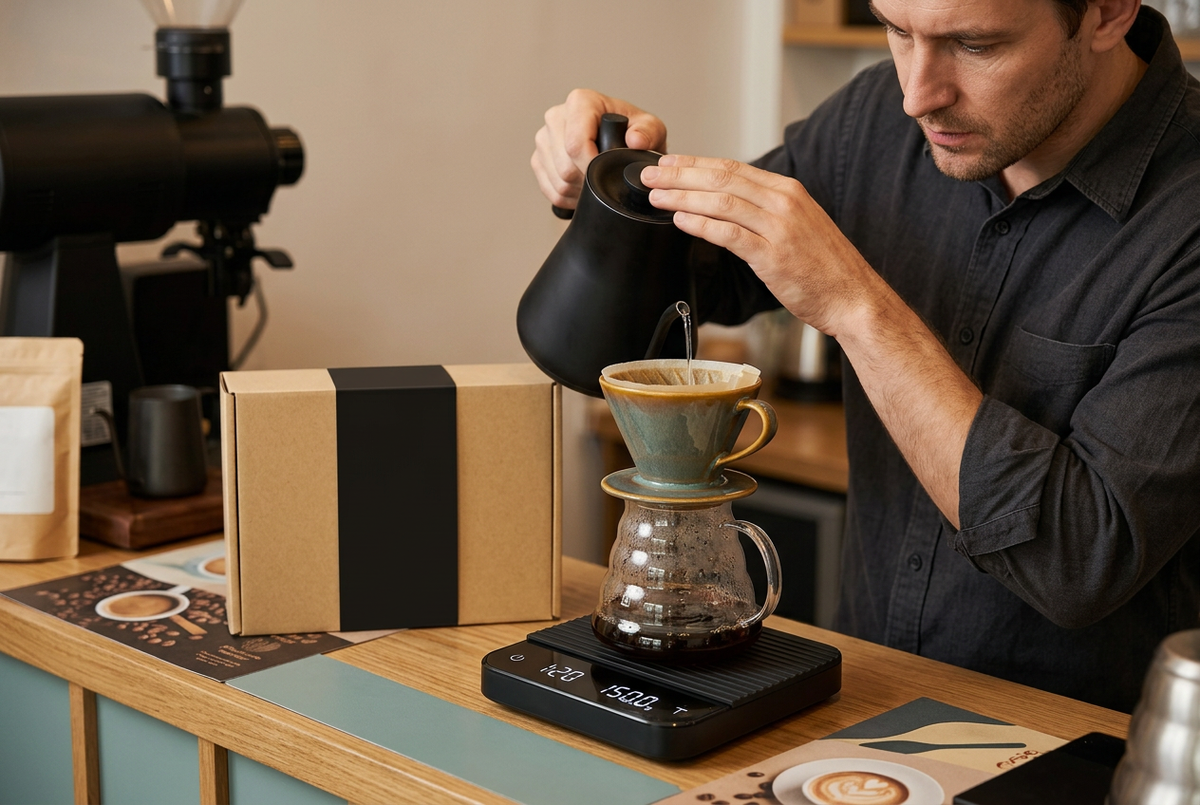
During a pour-over, the setup becomes a small working system: kettle, dripper, filter, server and scale. Arrange those pieces before the water begins to move. Check that the vessel sits securely on the platform, the total load is within the verified limit and the front display remains in view.
The photograph shows one possible brewing arrangement, with a glass server and dripper above the scale. It is an illustration of use, not a guarantee that every brewer will fit. Confirm platform dimensions, load capacity and permitted temperature exposure before placing your own equipment on it.
As you brew, let the measurement serve the recipe rather than distract you from handling hot water safely. Keep the stream inside the dripper, avoid spills onto the device and make changes gradually. Note the information you need, then return your attention to the cup.
The darker shirt and black kettle echo the scale's body, while warm wood and muted teal bring color to the scene. The overall impression is practical and layered: the equipment has a clear place, and the display remains part of the workflow rather than an afterthought.
🧰 Set Up the Workspace Before the Numbers Begin
- Choose a level surface. Use a stable counter with enough room around the scale. Keep it away from edges and objects that could press against the device or vessel.
- Check the operating requirements. Follow the supplied instructions for power, startup and any required setup. Do not assume a charging method or battery type from the product image.
- Place the container carefully. Center a compatible bowl or brewer on the platform. Confirm that the complete loaded setup is within the documented maximum.
- Establish the starting reading. Use the documented zeroing or container-weight procedure, if supported, rather than guessing what a symbol does.
- Measure and observe. Add ingredients gently and use the timing function according to its actual instructions. Avoid touching the loaded vessel while reading the display.
- Finish with a short note. Record the details you want to repeat, remove the vessel carefully and clean the scale as directed.
A repeatable setup is often more useful than a complicated one. Give the device the same place to sit, use equipment that fits and keep your recipe notes simple enough that you will actually read them again.
🟤 Black at the Center, Warmth Around the Edges
The scale's dark finish works as an anchor for a coffee setup with more than one color. Pair it with walnut for warmth, cream ceramics for contrast and amber glass for a softer highlight. Muted teal linen adds a cooler accent without taking over the composition.
The horizontal ribs create a repeated texture across the platform, while the smooth front panel brings a different finish below. Rounded corners soften the outline, giving the device a low-profile appearance alongside taller coffee tools. Keep the display edge facing you when arranging the scene so the useful details remain part of the design.
The kraft box with a plain black band is a unified, unbranded packaging concept for the images. Actual delivered packaging should be confirmed separately. Bowls, brewers, kettles, cups, beans and decorative props are not an included accessory list.
🔋 Check the Specifications That Matter to Your Routine
The product image establishes its appearance, including the black ribbed platform, rounded body, front-facing digital readouts and visible control symbols. It does not establish maximum capacity, accuracy tolerance, platform dimensions, battery type, charging support, runtime or response speed.
No waterproofing, spill resistance, heat rating, automatic timer behavior, Bluetooth connection or app support is claimed here. Confirm these details before choosing a particular brewing environment or cleaning method. Do not immerse the device or assume the ribbed surface makes the electronics safe around water.
Does the displayed decimal prove a particular precision?
No. The characters shown on a screen describe the display format. Verified measurement performance requires the actual product specification.
Will it fit under an espresso machine?
That depends on the scale's confirmed dimensions and your machine's available clearance. Check both before planning that setup.
Can it make my coffee consistent on its own?
A scale gives you information to use. Your beans, grind, water, equipment and technique still influence the cup. Use measurements alongside tasting and observation, not instead of them.
Make Your Next Good Cup Easier to Remember
You do not need to turn every coffee into a project. Sometimes a measured dose, an observed pour and a short note are enough. Those details give you a more useful starting point when you find a recipe worth returning to.
This black digital coffee scale brings that approach into a distinctive, understated design. Give it a place in your setup, learn its documented operation and let the readings support the way you like to brew.
Start a more measured coffee routine for $56.00 USD.